
Learn about Stephen’s teachings on death phobia in our society and how palliative care and the medical system fail to address this problem.

 In this episode I share an excerpt from an interview with Stephen Jenkinson, author of the book Die Wise, founder of Orphan Wisdom and subject of the documentary Griefwalker. Stephen discusses some of the problems with our approach to death in modern society, including the medical system.
Learn more about Stephen’s work here.
Get Die Wise here.
ANNOUNCEMENTS:
Thank you to my latest supporter on Patreon.com/eolu: Bernadette Koch. I appreciate your willingness to contribute to this podcast and the End-of-Life University Series to keep them on the air. If you’d like to join the team, support this work, and get awesome bonuses at the same time, go to Patreon.com/eolu to learn more and sign up!

On July 24th I’m hosting Suzanne O’Brien RN for a free webinar where she’ll be teaching “End-of-Life Doula Training for Caregivers and Volunteers.” If you’d like to know more about the work of end-of-life doulas and learn important skills for caring for the dying, this webinar will be valuable for you.
Learn more at: eoluniversity.com/obrien.
Click here to sign up for the webinar (it’s free and you’ll receive the replay if you can’t attend live.)
FEATURE PRESENTATION:
 My guest Stephen Jenkinson is a palliative care consultant, teacher, author and ceremonialist who is “revolutionizing grief and dying in North America.” As the author of Die Wise he teaches that “Dying well is a right and responsibility of everyone.”
Dying well is a right and responsibility of everyone. – Stephen Jenkinson
In this interview we discuss:
- The origin of death phobia in our society
- How the fear of non-existence is the greatest fear of most people
- Why “lost” and “loss” are not helpful terms to use when discussing death
- The danger of the “fighting illness” mentality of modern medicine
- Why dying and grief are things that we “do” rather than events that “happen to us”
- Why palliative care should be dying-centered rather than relief-centered
(This is an excerpt from the interview with Stephen. The full interview can be found at Patreon.com/eolu as a bonus for Platinum level supporters ($5 per month.))
Tune in every Monday for a new episode and if you like this content please share it with others or consider leaving a review on iTunes.
Until next week:
Face Your Fear BE Ready Love Your Life

 In this episode I share an interview from the archives with actress Judith Gantly who presents a one-woman play titled “Waltzing the Reaper.” We discuss the benefits of compelling theatre for inspiring an audience to talk about end-of-life issues.
 On July 24th I’ll be hosting a free webinar with Suzanne O’Brien RN on End-of-Life Doula Training for Caregivers and Volunteers. She will share the Level I training she offers to community members who want to learn how to care for their families and neighbors at the end of life. There will be a Q&A session with Suzanne following the webinar and you will receive the replay if you can’t attend live. Stay tuned for registration information!

 In this episode, recorded just after the celebration of what would have been Cicely Saunder’s 100th birthday, I talk about how she became interested in caring for the dying, what inspired her to create St. Christopher’s Hospice, and what we can learn from her determination to improve care at the end of life.
 Thanks as always to my devoted supporters at


 In this episode I share a “legacy interview” with two of the directors of the documentary film “A Will for the Woods” – Amy Browne and Brian Wilson. This is one of my favorite films and I encourage you to consider bringing it to your community for a screening and discussion about home funerals and green burial.
 This episode is sponsored by my supporters on

 In Part 2 of this discussion I’ll look at the major “threats” to the advancement of improved care for the dying and dead in our society and how we might overcome them. Be sure to listen to
  Get the Teaching Guidelines for a Death & Dying Class if you are interested in teaching your own class. You’ll be on the mailing list for the next Work Group for Death & Dying Class Teachers.
 In this episode I share information from an article I researched and wrote about the natural childbirth movement in the U.S., how it developed over decades and ultimately succeeded with the help of the Baby Boom Generation. I’ll show how our current end-of-life movement is following a similar path and what we need to learn from the past. Download the special report below:
 This episode is sponsored by the album Healing Chants by Gia! Check out this gorgeous collection of chants to help you relax, breathe deep, let go, and heal. Stay tuned to the end of the episode to hear the chant: You and I Are One.

 Today’s “mini-episode” airs on Memorial Day in the U.S. – a day when we honor those who have given their lives in military service to our country. I share a few thoughts about how to give the best care possible to those who have served as they reach the end of their lives.
 Check out A Year of Reading Dangerously online reading group if you’d like to read books about death, dying and the afterlife and join our online discussions. The group will be going on all year long in 2018! Click

 In this episode I share an interview with psychologist Matt McKay PhD who tells how he began receiving messages after his son’s death that taught him about spirituality here in this life and in the afterlife. Matt shares his suggestions for communicating with those “on the other side.”
 This episode is sponsored by my book:

 In this episode I share an interview with Kate Riley, author and death midwife, about our own relationships with our mothers and how they changed as we provided care to them at the end of life. Happy Mother’s Day to all mothers out there listening!

 In this episode I share my own story of traveling to Normandy to retrace my father’s footsteps during World War II. This was part of a grief pilgrimage I took to help me understand the factors that led to my father’s suicide many years later.

 In this episode I share an interview with Rachel Stephenson, an author, speaker and educator, who shares the story of her mother’s sudden death when she was 5 years old and the lasting impact it has had on her and the lives of her family. Rachel’s TEDx Talk on the same subject has attracted a lot of attention and points out why we need to address grief and loss with children.

 In this episode I’ll share how one simple question helped clarify my Mom’s end-of-life wishes and why I recommend starting there to put your own advance care planning into the proper perspective. This episode is sponsored by my course “
 In this episode I share a “legacy interview” from the archives with Magnum – a trained facility dog – and his handler Carol Mestemacher about the benefits of pet therapy for hospice patients. Magnum recently “retired” from his volunteer position so I decided to honor his work by featuring this interview today. Thank you for your service Magnum and Carol!

 In this episode I share my thoughts about the importance of forgiveness and why you shouldn’t wait until the end of life to start practicing it. I’ve been working on it all my adult life and I can guarantee you it’s a worthwhile endeavor!
 For the month of April I’m hosting the
  If you are interested in teaching a death and dying class at some point in the future you can download the Teaching Guidelines
 In this episode I share an interview with Molly Stuart who is a lawyer, artist, chaplain and hospice volunteer. She teaches a wonderful workshop on end-of-life planning that includes art to help people uncover their deepest values and concerns.
 The month of April features National Healthcare Decisions Day and in honor of that event I am sharing the 10-day S.M.A.R.T. Decisions Challenge – a free challenge that will help you get your end-of-life planning done with guidance along the way by email.


 In this episode I share my thoughts on why the minimalist lifestyle could help us avoid excessive and unnecessary medical treatment at the end of life. In addition there are many other benefits to living simply and with “less is more” as our goal when we get older.

 In this episode I share a conversation with Rev. Terri Daniel about the “other grief” that occurs throughout life with or without the death of a loved one. We’ll talk about this hidden grief and why it is important to acknowledge it as an important part of life.
 In this episode I share my thoughts on my own journaling practice and how it has changed my life. I also relate a story of a woman who kept a “hospice journal” during her last days of life. You’ll find plenty of reasons to start your own journaling practice and you can download the Journaling Starter Kit below if you are interested!

 In this episode I focus once again on death education and talk about the qualities that are best suited to teaching this subject matter. Find out if you would be a good teacher and what subject and students are ideal for your knowledge and experience.


 This week is a solo episode in which I share two stories about hospice patients I cared for and the unpredictability of death, even when a terminal diagnosis is present. This reality means that we have to keep growing in our awareness and acceptance of death as a mystery, even while we complete paperwork that gives concrete instructions for our last days of life. AND I feature some clips from my beautiful daughter Gia’s new album of Healing Chants!
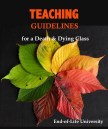 Get the Teaching Guidelines for a Death & Dying Class then join our work group in March as we team up to help one another create our own unique classes!