Learn why it’s difficult to make black-and-white decisions for the end of life when death itself is a mystery that will unfold with its own timing.
This week is a solo episode in which I share two stories about hospice patients I cared for and the unpredictability of death, even when a terminal diagnosis is present. This reality means that we have to keep growing in our awareness and acceptance of death as a mystery, even while we complete paperwork that gives concrete instructions for our last days of life. AND I feature some clips from my beautiful daughter Gia’s new album of Healing Chants!
You can still sign up for A Year of Reading Dangerously and expand your consciousness about death by reading books throughout 2018! Sign up here.
Get the Teaching Guidelines for a Death & Dying Class then join our work group in March as we team up to help one another create our own unique classes!
A HUGE THANK YOU to my supporters on Patreon.com/eolu: Julie Lester, Brian Hempstead, and Mandy Pierpoint! Your generosity means so much to me! And thanks as well to all of the donors who have made pledges over the past year. I appreciate you so much! If you’d like to become a patron and receive the Hospice Happy Hour Q&A recording each month along with other bonuses go to Patreon.com/eolu to learn more!
FEATURE PRESENTATION:
I learned through my hospice work that death is a mystery and cannot be predicted or controlled unless we choose to take it into our own hands. Even then the method we use to end our life might fail or we might die of other causes before we can carry out our plans. But that mysterious aspect of death makes it endlessly fascinating to witness. If we can adopt a beginner’s mind about death then we can gradually become more relaxed and less fearful as we watch it approach.
The stories of two of my hospice patients illustrate the mystery of death quite well. One man was expected to live for several months after he signed up for hospice but died the next day of a massive heart attack. Another was in terminal renal failure and, according to medical experts, could not possibly remain alive for more than 2 weeks. And yet, that patient survived an entire year (it’s a great story so please listen in!)
As we work to complete our advance directives and put our wishes into writing we should also remember that this paperwork is not a guarantee of how our final days will unfold. The legal forms just help us prevent an outcome we don’t want. But when and how death comes will still be a mystery and we may end up awake and alert during our final days and responsible for our own decisions. So we would do well to keep learning about death and growing in our acceptance. In that way we can best prepare ourselves for any decisions we have to make at the end of life.
Remember there’s a new episode each Monday! Please tune in again next week and, if you enjoy this content leave a review on iTunes.
Learn about studies that have shown the positive benefits of death awareness and why we need more of it in the world.
In this episode I share some recent studies that validate the fact that being aware of death has positive effects on behavior toward others. This is evidence that we need more classes, workshops, books, films, and discussion groups about death in order to promote health, peace, tolerance, and compassion in the world.
Remember you can still sign up for the online reading group A Year of Reading Dangerously by clicking here. Join us to read one book about death, dying and the afterlife each month during 2018!
You can also get the Teaching Guidelines for a Death & Dying Class here if you are interested in teaching a class in your community or for college or high school students. In addition when you sign up for the guidelines you could become part of a work group during the month of March to create a death and dying class.
THANK YOU to all of you who help support this podcast with your donations on Patreon.com/eolu!!
FEATURE PRESENTATION:
Kenneth Vail and his colleagues at the University of Missouri recently did a review of several studies on death awareness and behavior. They found that increased death awareness was associated with several positive behaviors that could lead to needed changes in how we live our lives and connect with one another. Here are some of the findings:
Helping behaviors increased when people were given subtle reminders of their mortality, such as being near a cemetery. These positive behaviors include compassion, tolerance, empathy and pacifism.
Pro-environmental behaviors increased for people with heightened death awareness
Positive health behaviors such as quitting smoking, starting an exercise program, and performing breast self-exams increased for people who became aware of death
People with fundamentalist religious values who had previously rejected members of other religions were more likely to show compassion toward those of other groups when they experienced greater death awareness
In our world that is currently suffering with environmental degradation, polarization of society, violence, and unhealthy behaviors perhaps increased death awareness could hold some promise for our survival. Join me in improving death awareness this year by reading books and teaching classes on death and dying!
Tune in every Monday for a new episode and if you enjoy this content consider leaving a review on iTunes (thank you – it makes a big difference!)
Learn tips for teaching college students about death and dying from psychologist and educator Stacy Smith.
In this episode I share an interview with Stacy Smith who teaches a course in the Psychology of Death and Dying to students at a local community college. She’ll offer some great tips about teaching your own class and help you get inspired to become a death-ed teacher!
Stacy Smith will share how she started teaching her college class: The Psychology of Death & Dying. In this interview you’ll learn:
How Stacy got interested in teaching a college class on death and dying
How to gain support from school administration and attract students to a death and dying class
An overview of Stacy’s lesson plan for this course
Projects, assignments, guest lecturers, and field trips she recommends
Feedback from students who have taken the course
Qualities of a great death and dying class teacher
Tips for starting your own class on death and dying
Stacy Smith has a degree in counseling education and counseling psychology from the University of Colorado in Denver. She created a Legacy program for 5-18 year olds dealing with grief and loss. She has been in private practice for 14 years and specialized in grief counseling. She has been teaching in the Psychology Department at Colorado Mountain College for 5 years, including the class: The Psychology of Death and Dying. She is currently writing a book about destigmatizing mental illness and treatment.
Learn why the Death Education movement is vitally important right now for our society and get inspired to teach your own class about death and dying!
This week I’m continuing my focus on death education by discussing some important reasons why right now we desperately need more death-ed in every aspect of our society. Learn how you might become a death educator in your own community and start to share your knowledge to help others become aware of death.
You can still join A Year of Reading Dangerously and start reading books about death and dying with 700 other people around the globe! You’ll get to take part in live Q&A discussions with the authors of many of the books we are reading. For February we are reading Smoke Gets in Your Eyes by Caitlin Doughty–and she’ll be joining our discussion at the end of the month! Sign up now by clicking here!
Thanks again to all of my supporters at Patreon.com/eolu! Your generosity and encouragement mean everything to me! Become a patron for as little as $1 per month–where else can you do so much good with just $1? Go to Patreon.com/eolu to learn more.
FEATURE PRESENTATION:
Today I’m discussing why we need death education everywhere in our society and here are some of the places where it should take place:
Home – parents need to learn how to talk about death and dying with their children rather than shielding them from the reality of death
Schools – high school and college classes are a perfect place to introduce death and dying to young, curious students who can only benefit from learning more about death. (Next week I’ll share an interview on this podcast with Stacy Smith who teaches The Psychology of Death & Dying to college students, and on EOLU at the end of February I’ll present an interview about a high school elective on Death and the Meaning of Life with the teacher and 3 of his students.
Churches – clergy of all faiths need to be educated about death and dying so that they can better support their congregants on end-of-life issues within their belief system
Workplaces – employers need to understand the impact of death and grief on their employees in order to create supportive policies for bereavement leave; workers need to know how to interact with co-workers who are suffering with illness and grief
Medical system – doctors, nurses, and all other providers of healthcare need education in how to get comfortable with death, talk about it with patients and families, guide decision-making, initiate conversations with patients
Hospitals and nursing homes – need education to create sacred spaces for dying, to support patients and families at the end of life and honor patients’ wishes
Some of the reasons why death education is so important right now are:
We are living longer and the incidence of complex diseases like Alzheimer’s is increasing which creates a need for better advance planning. Patients and families need to prepare for the type of medical care and caregiving that may become necessary and understand how they can provide for those possibilities in the future.
Medical technology continues to advance at a rapid rate. Our ability to forestall death and keep a body alive has far outstripped our willingness to grapple with difficult end-of-life decisions. We need education to help people plan and prepare for the future and be pro-active about the care they receive. Studies show that those who think and talk about death are more likely to put their wishes in writing, to talk with others about their wishes, and to stop medical treatment when it is no longer helping.
Ethical and moral dilemmas about end-of-life issuesare splitting our society and families. Debates over physician-assisted dying and discontinuing medical care when it is not helping are going to increase with the aging of the Baby Boom generation. According to Pew Research Center surveys: 47% of Americans favor assisted-dying laws and 49% are opposed; 66% believe that there are times when doctors should stop treatment and allow patients to die a natural death, but 31% believe that doctors should always do everything possible to prolong life. These opposing perspectives are likely to be present in families too, especially if no advance planning has been done.
The high cost of being unprepared for death. Lack of advance care planning can lead to higher medical expenses, especially if the patient receive extreme care that was not actually warranted or wanted. Families unprepared for funeral planning are more likely to choose higher cost options and be vulnerable to unscrupulous marketing practices when they are grieving. Failure to plan ahead and put wishes in writing can cause increased stress and guilt for family members who must make decisions without any guidance.
The emotional and spiritual cost of ignoring death. As described in episode 127, death is our greatest teacher about life. Those who fail to recognize the inevitability of death are less likely to live to the fullest and appreciate the moment because they think they have plenty of time.
If you care about any of these issues and have been learning about death and dying by listening to this podcast and the End-of-Life University Interview Series, you are the perfect person to become a “death educator.” Start by sharing what you’ve learned with family and friends and consider putting together your own class in your community to help educate others.
You can download my free pdf: Teaching Guidelines for a Death & Dying Class and get some tips and tactics for starting your own community death-ed class! When you download the handout you’ll receive an invitation to a special work group I’m putting together in March on brainstorming your class.
Stay tuned to future episodes of this podcast to get more information about death education: next week I’ll share an interview with Stacy Smith about teaching college students about death and dying. On February 22nd I’ll present an interview on End-of-Life University with the teacher and students from a high school death-ed elective.
I hope you feel inspired to become a “death educator” in whatever capacity suits you, whether you simply share your knowledge with family and friends or start a class in your community!
If you enjoy this podcast please consider leaving a review on iTunes – it will be greatly appreciated!



This week is a solo episode in which I share two stories about hospice patients I cared for and the unpredictability of death, even when a terminal diagnosis is present. This reality means that we have to keep growing in our awareness and acceptance of death as a mystery, even while we complete paperwork that gives concrete instructions for our last days of life. AND I feature some clips from my beautiful daughter Gia’s new album of Healing Chants!
 Get the Teaching Guidelines for a Death & Dying Class then join our work group in March as we team up to help one another create our own unique classes!
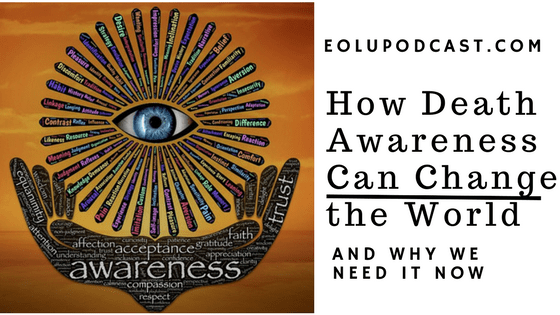
 In this episode I share some recent studies that validate the fact that being aware of death has positive effects on behavior toward others. This is evidence that we need more classes, workshops, books, films, and discussion groups about death in order to promote health, peace, tolerance, and compassion in the world.
 You can also get the Teaching Guidelines for a Death & Dying Class

 In this episode I share an interview with Stacy Smith who teaches a course in the Psychology of Death and Dying to students at a local community college. She’ll offer some great tips about teaching your own class and help you get inspired to become a death-ed teacher!


 This week I’m continuing my focus on death education by discussing some important reasons why right now we desperately need more death-ed in every aspect of our society. Learn how you might become a death educator in your own community and start to share your knowledge to help others become aware of death.
 You can download my free pdf: